
Trees are one of the most valuable features of any property, but they’re not invincible. In Virginia’s humid climate, our trees face pressure from a wide range of pests that can cause serious damage if left untreated. From unsightly leaf damage to structural failure, infestations can turn a healthy tree into a hazard. Knowing the signs early could save your tree, and your wallet.
Why Tree Pest Awareness Matters
Tree pests don’t just nibble leaves; they can weaken your tree’s structure, open the door to disease, and even kill the tree outright. In neighborhoods across Northern Virginia and the DC metro area, we regularly see trees affected by insects that homeowners didn’t even know existed. Being able to recognize early warning signs makes a huge difference.
How to Spot a Tree Pest Problem
Common Signs of Tree Pest Infestation
- Leaves turning yellow or brown out of season
- Premature leaf drop
- Small holes in bark or leaves
- Sticky residue (honeydew) on leaves, cars, or patios
- Black sooty mold growing on foliage
- Webbing, bag-like sacs, or visible insect clusters
- Bark splitting, trunk wounds, or sap oozing
Not all damage is caused by insects, but if you see several of these symptoms at once, it’s worth calling in a professional to inspect the tree.
Top Tree Pests in Virginia and How to Identify Them
Emerald Ash Borer (EAB)
- Bright green metallic beetle, about half an inch long
- Attacks only ash trees
- Look for D-shaped exit holes, canopy dieback, and bark splitting
- Often fatal if not treated early
Spotted Lanternfly
- Grey wings with black spots; bright red underwings when open
- Often found on Tree-of-heaven, maples, and fruit trees
- Leaves behind sticky honeydew that attracts mold and other pests
- Spreads rapidly; It is now so widespread in Virginia that reporting it is no longer required
Southern Pine Beetle
- Primarily affects loblolly, shortleaf, and Virginia pines
- Trees turn yellow, then red, and die rapidly
- Look for pitch tubes (small sap blobs) on the trunk and S-shaped tunnels under bark
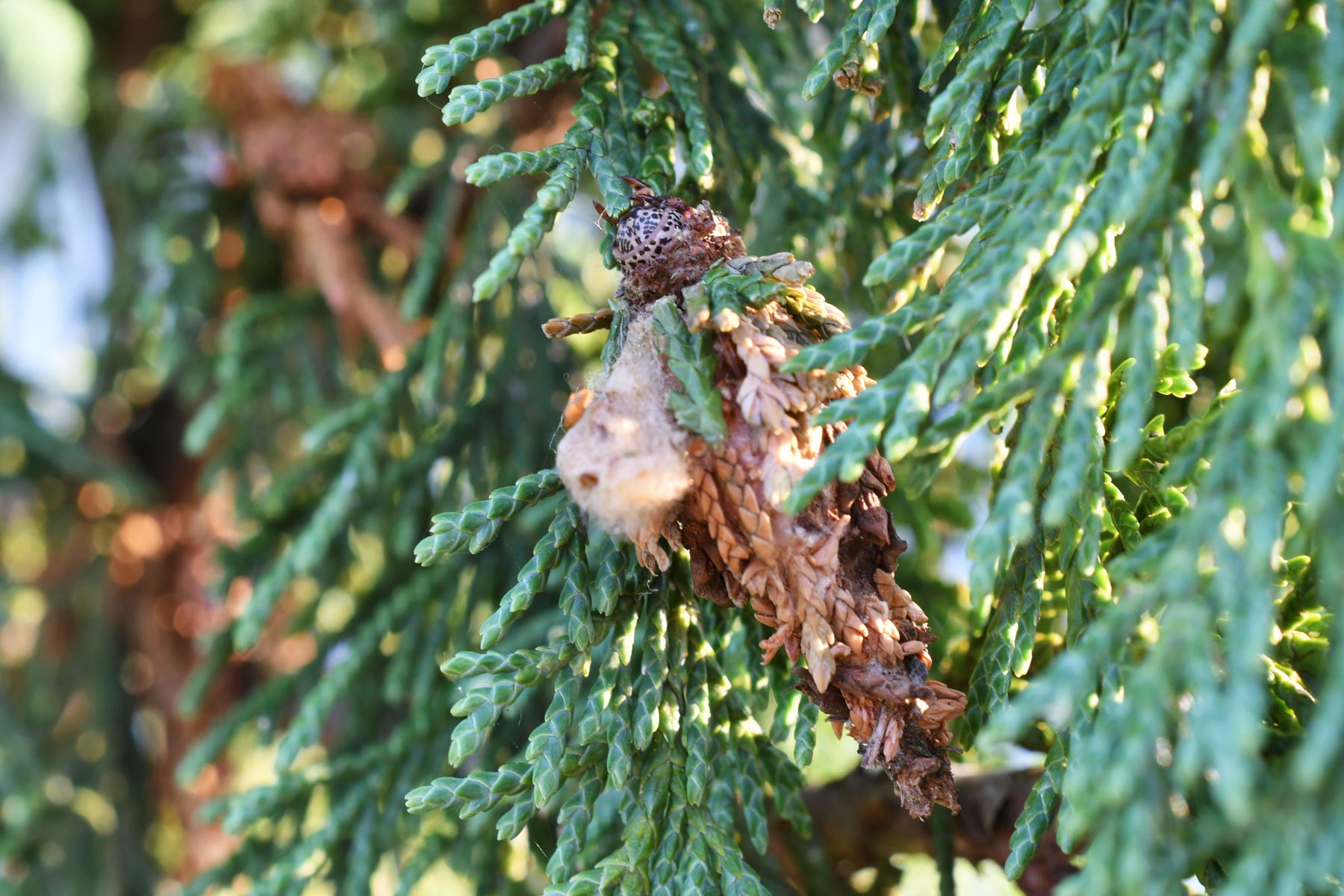
Bagworms
- Most common on arborvitae, junipers, and cedars
- Construct hanging silk bags made from foliage
- Heavy infestations can strip trees of all their needles
Scale Insects
- Appear as small, waxy bumps on twigs and stems
- Feed on sap, causing stunted growth and yellowing leaves
- Produce honeydew, which leads to sooty mold
- Common on magnolia, holly, and maple

(Emerald Ash Borer)
What to Do If You Suspect a Pest Problem
Tree pests can spread fast and cause irreversible damage. If you’re seeing warning signs, or if something just looks off, it’s best to have a professional assess the situation.
DIY treatments often miss the root of the problem, and some pests (like emerald ash borer) require licensed applications of specific insecticides. Early intervention is the best defense.
When to Call a Tree Service For a Pest Problem
- You see visible insect activity or signs of infestation
- A tree is losing limbs or foliage unexpectedly
- There’s damage to the trunk or signs of internal decay
- You’re unsure whether a tree is still structurally sound
AAA Tree Service offers expert assessment and prompt action for pest-damaged trees. We can help determine whether treatment is possible, or if removal is the safer option.
Protect Your Property and Call AAA Tree Service Today
Pest problems don’t get better on their own. If you’re concerned about the health of your trees, let AAA Tree Service provide a professional evaluation. We serve homeowners across Northern Virginia with honest advice, efficient service, and decades of experience dealing with the region’s most destructive pests.
Contact us today to schedule an inspection or learn more about how we can help protect your trees.